Source Hydraulic Impact Crusher for Mine Applications
Source a hydraulic impact crusher for mine operations from 30 verified listings. Compare specifications such as processing capacity, power ratings, and feed sizes to find the right equipment for your mining and construction projects; compare the available evidence and request quotations based on your requirements.
Key considerations
Products List




Comprehensive Sourcing Guide
Hydraulic Impact Crusher for Mine Sourcing Guide
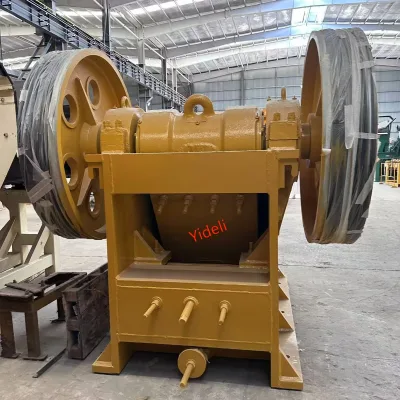
Procuring a hydraulic impact crusher for mine operations requires careful evaluation of the machine's ability to handle high-volume feed materials while maintaining consistent particle size reduction. Buyers must prioritize units that demonstrate robust rotor structures and heavy-duty impact plates, as these components directly influence the longevity and efficiency of the crushing process in demanding mining environments.
The observed market listings indicate a wide range of power configurations, from 7.5kw to 260kw, suggesting that selection depends heavily on the specific throughput requirements of the mining site. Sourcing teams should verify that the selected model aligns with the intended processing capacity, which ranges from 90 to 250 tons per hour, to ensure the equipment meets the operational demands without causing bottlenecks in the production line.
Product Scope and Observed Listing Signals
The available product scope encompasses various models designed for different feed sizes, with inlet dimensions ranging from 145450mm to 8601520mm. Buyers should note that some units offer customizable feed sizes up to 800mm, while others are fixed at specific dimensions like 400*1080mm, necessitating a precise match between the crusher's physical intake and the raw material characteristics of the mine.
Listing signals reveal that packaging is typically handled in wooden boxes or crates, which is critical for protecting the machinery during international transit from China. Additionally, the availability of customization options for color and standard specifications allows buyers to tailor the equipment to specific site requirements, though the core mechanical attributes like the AC motor type and new condition remain consistent across the observed inventory.
Technical Specifications to Verify
Verification of technical specifications must begin with the motor power and rotor speed, as these factors dictate the crushing force and output particle size. The observed data shows motor powers varying significantly, with specific models rated at 160kw or 7.5kw, and rotor speeds ranging from 600r/Min to 1500r/Min, requiring buyers to calculate the exact energy consumption and throughput efficiency needed for their specific ore type.
Buyers must also scrutinize the maximum feed size and outlet dimensions to ensure compatibility with upstream feeding systems and downstream screening processes. Specifications such as a maximum feed size of 350mm or 100mm, and outlet sizes between 200-300mm or 0-30mm, are critical parameters that determine the final product quality and the overall efficiency of the mining circuit.
Compliance and Safety Documentation
Compliance documentation is essential for international procurement, with ISO and CE certifications appearing as standard requirements for the machinery. Buyers should request valid certificates to confirm that the manufacturing processes and safety features meet international standards, ensuring that the equipment is safe for operation in regulated mining jurisdictions and can pass local safety inspections.
Safety features are further reinforced by the use of high-manganese steel or alloy steel for impact plates and cast or welded steel for the frame, which are materials selected for their durability and resistance to wear. Procurement teams must verify that these material specifications are explicitly stated in the technical data sheets to guarantee that the crusher can withstand the abrasive nature of mining materials without premature failure.
Cost Drivers and Commercial Terms
Cost drivers in this category are heavily influenced by the power rating and the complexity of the customization options selected. Units with higher power ratings, such as those in the 180-260kw range, generally command higher prices due to the increased material and manufacturing costs associated with heavy-duty components and larger motors required for high-capacity operations.
Commercial terms must clearly define the lead time and payment conditions, as observed listings indicate a standard lead time of 45 days for production and delivery. Buyers should negotiate these terms carefully, considering that the minimum order quantity is low, often starting at just one unit, which allows for flexible procurement strategies but requires precise scheduling to align with project timelines.
Supplier Qualification and Quality Control
Supplier qualification should focus on the manufacturer's location and their willingness to facilitate factory visits, as many suppliers in Henan, China, welcome warm visits to demonstrate their production capabilities. This transparency allows buyers to inspect the assembly line, verify the quality of the rotor structure, and assess the overall manufacturing standards before committing to a purchase.
Quality control measures must include a thorough inspection of the motor type and the condition of the machinery, ensuring that all units are delivered in new condition with proper packing. Buyers should insist on detailed inspection reports that confirm the adherence to the specified standards and verify that the heavy-duty high-strength steel rotor is correctly assembled to prevent operational failures.
Long-Term Procurement Checks
Long-term procurement checks should prioritize the availability of spare parts and the durability of the impact plate material, as these are the most critical components subject to wear in mining applications. Buyers must ensure that the supplier provides a clear supply chain for high-manganese steel parts to minimize downtime and maintain consistent crushing performance over the lifespan of the equipment.
Finally, buyers should establish a protocol for ongoing performance monitoring, tracking metrics such as processing capacity and power consumption against the initial specifications. Regular audits of the equipment's condition and a review of the supplier's support services will help maintain operational efficiency and ensure that the hydraulic impact crusher continues to meet the evolving demands of the mine.
FAQs
What certifications do hydraulic impact crushers have?
These machines typically hold ISO and CE certifications to ensure compliance with international safety and quality standards. Buyers should verify specific documentation for each unit, as certifications confirm adherence to manufacturing regulations and operational safety protocols required for mining applications.
What is the processing capacity range?
Processing capacities generally range from 90 to 250 tons per hour depending on the specific model selected. Larger units like the PF-1210 or VPF1320 offer higher throughput, while smaller models suit lower volume requirements, allowing customization based on site needs.
Can the power be customized?
Yes, power options are available in ranges such as 55-75kw, 132-160kw, and 180-260kw. The motor type is typically an AC electric motor, and buyers can select the appropriate power rating to match their specific mining operation requirements and energy constraints.
What is the lead time for delivery?
The standard lead time is approximately 45 days from order confirmation. This duration allows for manufacturing, quality inspection, and preparation of wooden box or crate packaging, ensuring the heavy-duty equipment arrives safely at the destination without damage during transit.
Where are these crushers manufactured?
These machines are manufactured in China, specifically in the Henan Province region, including Zhengzhou. This area is a known hub for heavy machinery production, providing access to established supply chains and skilled labor for constructing robust impact crushers for global mining clients.
What materials are used for key components?
Key components utilize high-manganese steel or alloy steel for impact plates and cast or welded steel for the frame. The rotor structure is built from heavy-duty high-strength steel to withstand intense crushing forces, ensuring durability and extended service life in harsh mining environments.